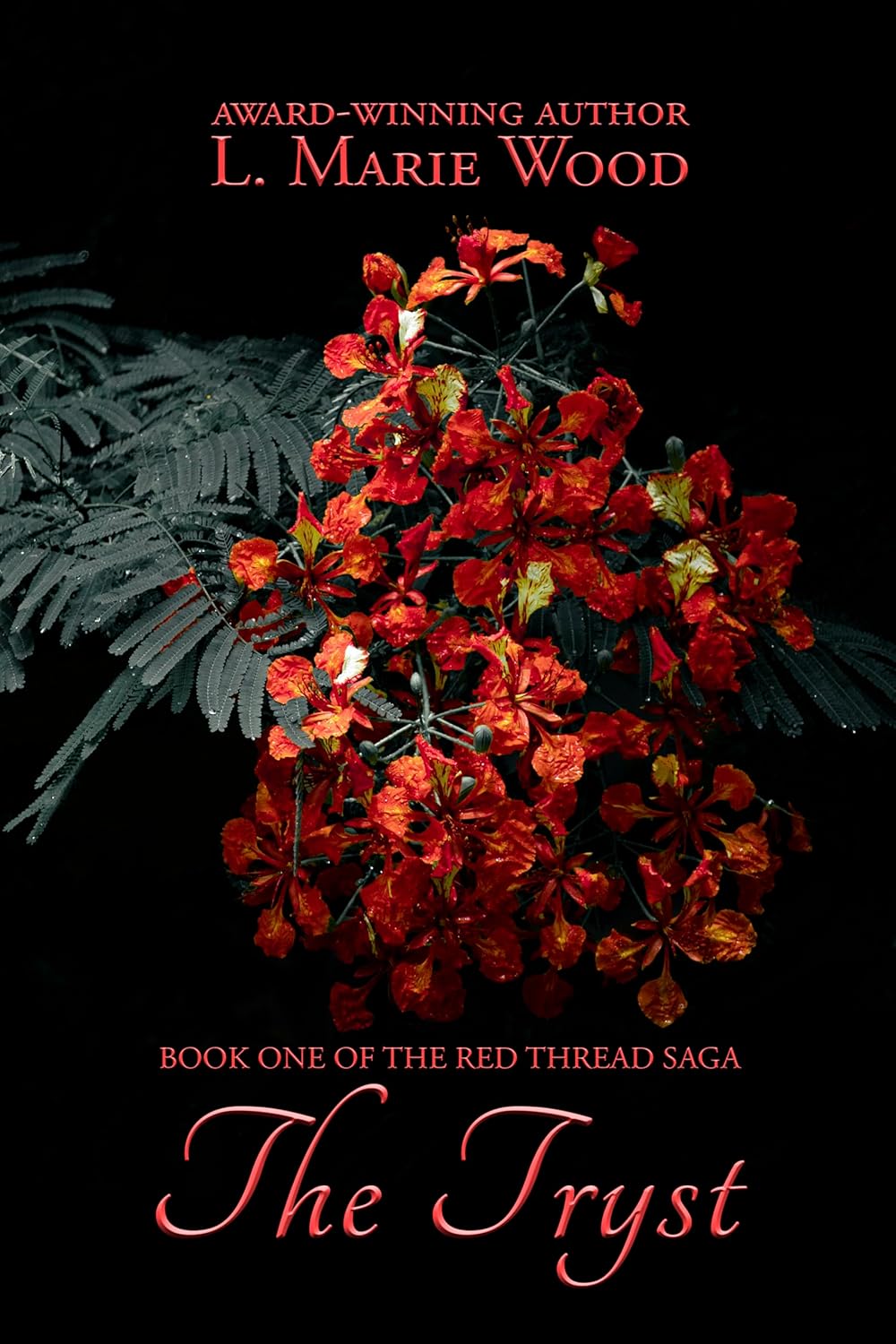
The Tryst by L. Marie Woods is the first book in The Red Thread Saga, telling the story of a meeting that seemingly happens by chance but leads to the discovery that three people’s fates are intertwined, as if they had always known each other.
We begin with a funeral. A man and woman stand by a coffin, mourning the man inside. The story then follows Nicole through her seemingly ordinary life. While traveling for work, Nicole makes a chance stop at a coffee shop where she meets Eric, and the two of them eventually meet Mark. There is an instant connection between the three that none of them can explain. Their chance meeting turns into dinner together and then into something more, with the three sharing a night together. However, each of them leads very different lives, including significant others and children. They eventually have to return to those lives, but promise to discreetly remain in touch until the unimaginable happens.
My description of the story is vague for a reason. It isn’t until very near the end that we discover why the three are drawn to one another and what other forces are at work affecting their lives. The author does try to convey the longing and connection between the three main characters, but I found the dialogue and internal thoughts disjointed and, at times, difficult to follow. The book is described as “slipstream,” which may explain the way the characters’ thoughts sometimes ramble and blend together.
Unfortunately, while the book is also described as containing action and suspense, I didn’t find much of either. The story moved at a pace that made it difficult for me to stay engaged, and the eventual explanations didn’t fully make up for the confusion I experienced along the way. There were some intriguing ideas at the heart of the story, particularly the concept of three strangers being inexplicably drawn together, but the execution didn’t work well for me.
Overall, The Tryst wasn’t a book I particularly enjoyed. The premise had potential, and I can see how readers who enjoy more unconventional, thought-driven storytelling might connect with it. Perhaps the rest of the trilogy provides the answers and momentum that were missing for me in this first installment. While I won’t be continuing with the series myself, readers who enjoy slipstream fiction and stories that leave much to interpretation may want to give it a try and decide for themselves.
I received a complimentary copy of this book. The opinions expressed in this review are my own. Many thanks to Regina Lavonne and L. Marie Woods for allowing me to review this book.


Leave a Reply